
Pressure care, made visible.
Fabric sensors in the mattress cover show your team each person’s position and how long they have held it, against the protocol you set.
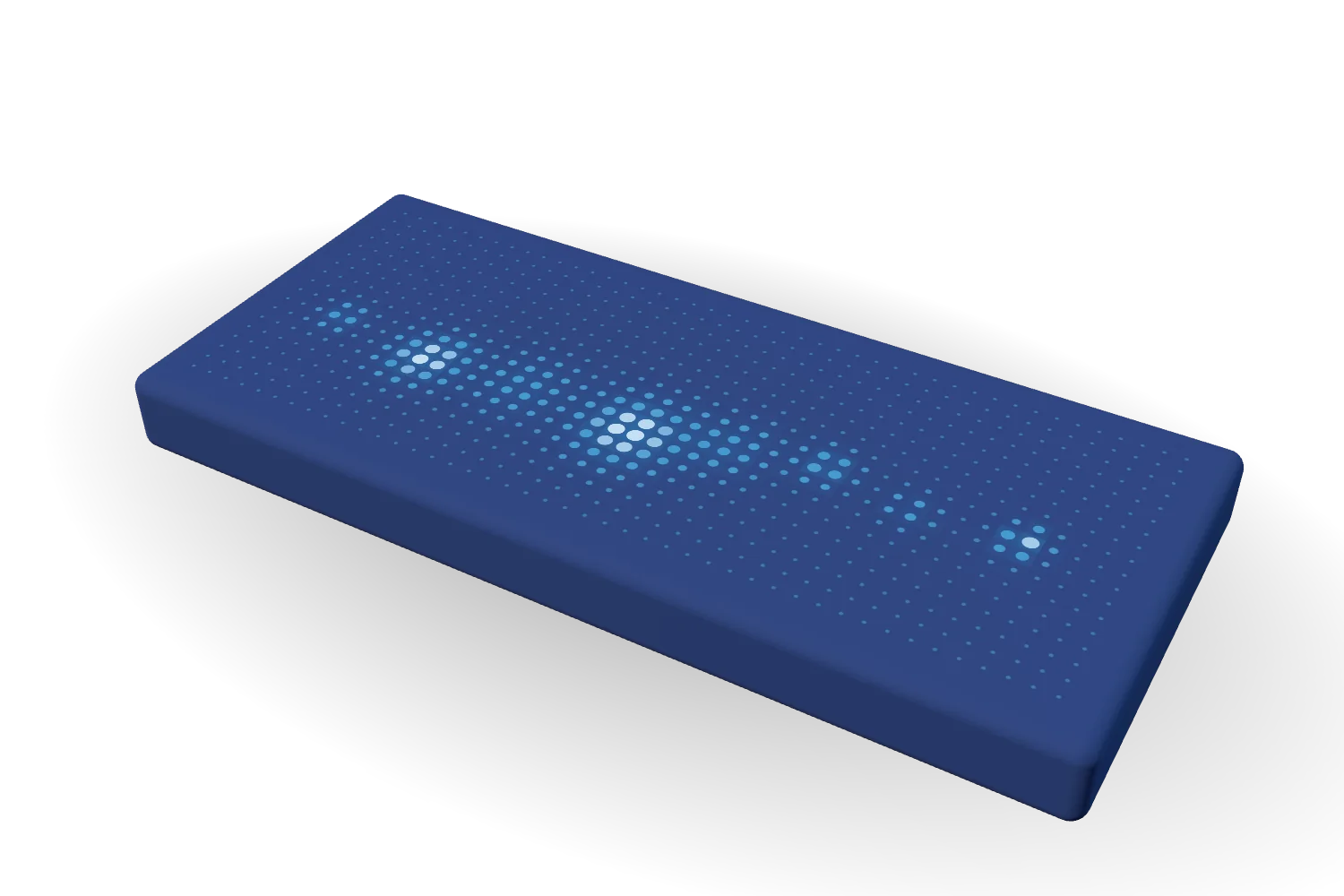
Before your rounds, see where to start.
Every resident’s position and time, against your protocol. You decide who to check first, and who can keep resting.
Illustrative demo data. Choose a bed to see its position on the mattress.
Show this page for
Your carers see each resident’s position and how long they have held it, against the turning protocol you set, on every shift.
- In the cover
- Sensing sits on the underside of the cover, beneath normal linen.
- On the screen
- Position and time, at the station or on a tablet.
- Nothing to wear
- No cameras, no wearables, nothing attached to the person.
How it works in your facility
What you get: the LenexaCARE® static foam mattress with sensing in its fitted cover, a Databox on the bed, and the ward view.
-
1 Sense
Fabric sensors in the mattress cover track each resident’s position and movement.
-
2 Show
The ward view shows each resident’s position and time in it, against your protocol.
-
3 Support
Your carers make the call, with a clear view of who to check first.
Then open any resident’s history
See how each resident’s position has changed across the day and night, and where time in one position came close to your protocol.
Know the turn held
A turn only relieves pressure if the resident stays in the new position. In a trial with ventilated intensive care patients, only 39% of turns were held for 15 minutes, the time set to relieve pressure.4 LenexaCARE® shows your team which turns held.
The view from management
Pressure injuries are estimated to cost Australian public hospitals over $9 billion a year.2 Leading indicators show where risk may be building, before an injury develops, with weekly reports against your targets.
- Turn compliance
- Turns delivered on time, against your agreed window.
- High-risk time
- How much prolonged pressure exposure is building.
- Risk windows
- The units, shifts and times where risk builds up.
- Favoured positions
- The positions each resident favours, and the body areas they load.
- Self-turning
- Who changes position on their own, between your turns.
- Personalised repositioning
- Turns set from your assessment and their own data, not a fixed schedule.³
Measured in Australian aged care.
A mixed-methods, before-and-after pilot in two Australian residential aged care homes, December 2024 to July 2025: six weeks with dashboards hidden from staff, then 29 weeks with them on.1 32 residents at high risk, 20 systems and more than 50 staff trained, with a senior-nurse champion in each home.
The same 16 residents · medians
Paired Wilcoxon signed-rank tests: p = .003 and p = .002. 13 of 16 residents improved on each measure.
All 32 monitored residents · weekly means
Interrupted time series: at switch-on, compliance rose 12.4 points (95% CI 6.5 to 18.4) and high-risk time fell 12.9 points (−18.8 to −7.0); both p < .001.
Bars start at 0%. Before = dashboards hidden; after = LenexaCARE® on. Turn compliance: time within the turning schedule, standardised to 3 hours. High-risk time: minutes beyond 4 hours in one position, as a share of all minutes.
- 0
- new pressure injuries in the 32 monitored residents over the 29 weeks with LenexaCARE® on. Against 4.8 expected from the homes’ historical rate: an estimate, not a control group.
- −56.1%
- facility pressure injuries excluding Stage 1 (41 to 18), all 241 beds, over comparable six-month periods. All stages: 69 to 40, −42%. Includes 221 beds without LenexaCARE®; not a controlled comparison.
Read it with its limits
- A before-and-after pilot in two homes, with no control group.
- Compliance began rising with staff training, before go-live (+2.35 pts a week).
- 16 paired and 32 monitored residents; some stopped early.
- “4.8 expected” is an estimate from historical rates, not a control group.
- Facility counts are unadjusted and include 221 beds without LenexaCARE®.
- A manuscript in preparation, not yet peer reviewed. The authors call for a controlled trial to confirm the results.
What the guideline asks
“We suggest that a sensor system that monitors the individual’s movement could be used to assist in evaluating repositioning needs for individuals at risk of pressure injuries when resources permit.”
The International Guideline, fourth edition (2025), recommendation R15. Conditional; very low certainty.3 R15 rests on three studies of body-worn sensors (RR 0.15, 95% CI 0.02 to 1.08; not significant). Pressure-mapping systems are still under panel review. The guideline does not assess LenexaCARE®, and the benefit depends on how staff act.
Staff reported high acceptability, citing improved situational awareness, prioritisation of care, and confidence in repositioning decisions.1
Ready for your governance.
- Included in the ARTG
- Class I · ARTG 475785
- ISO 13485:2016
- Certified QMS
- IEC 60601-1, -1-2
- Safety and EMC tested
- No resident identifiers
- Encrypted, in-country
- HL7/FHIR or standalone
- EMR integration optional
- Wipe-clean cover
- Medical-grade disinfectants
Questions families ask.
Comfort, dignity and privacy for the person in the bed. LenexaCARE® does not replace carers or clinical judgement. It provides additional information to support the care a family member receives.
What is LenexaCARE®?
Fabric sensors in the mattress cover continuously sense your family member’s position and movement.
Will they feel it?
There is nothing to wear. The sensing is part of the mattress cover, under their usual sheets, and works quietly in the background.
Is anyone watching them?
No. LenexaCARE® does not use cameras and does not make audio or video recordings. The care team sees position and time.
What does the care team see?
Which position your family member is resting in, how long they have been in it, and when they change position.
What happens to the information?
It is recorded by bed, with no names or dates of birth; only the care home links a bed to a person. It is encrypted in transit and at rest, and stored securely in Australia. The care home owns it and decides who can see it. Lenexa Medical does not sell or rent it. Authorised Lenexa support staff can access it to keep the system running, and Lenexa may use combined data that cannot identify anyone to improve LenexaCARE®.
The other layers of the same bed.
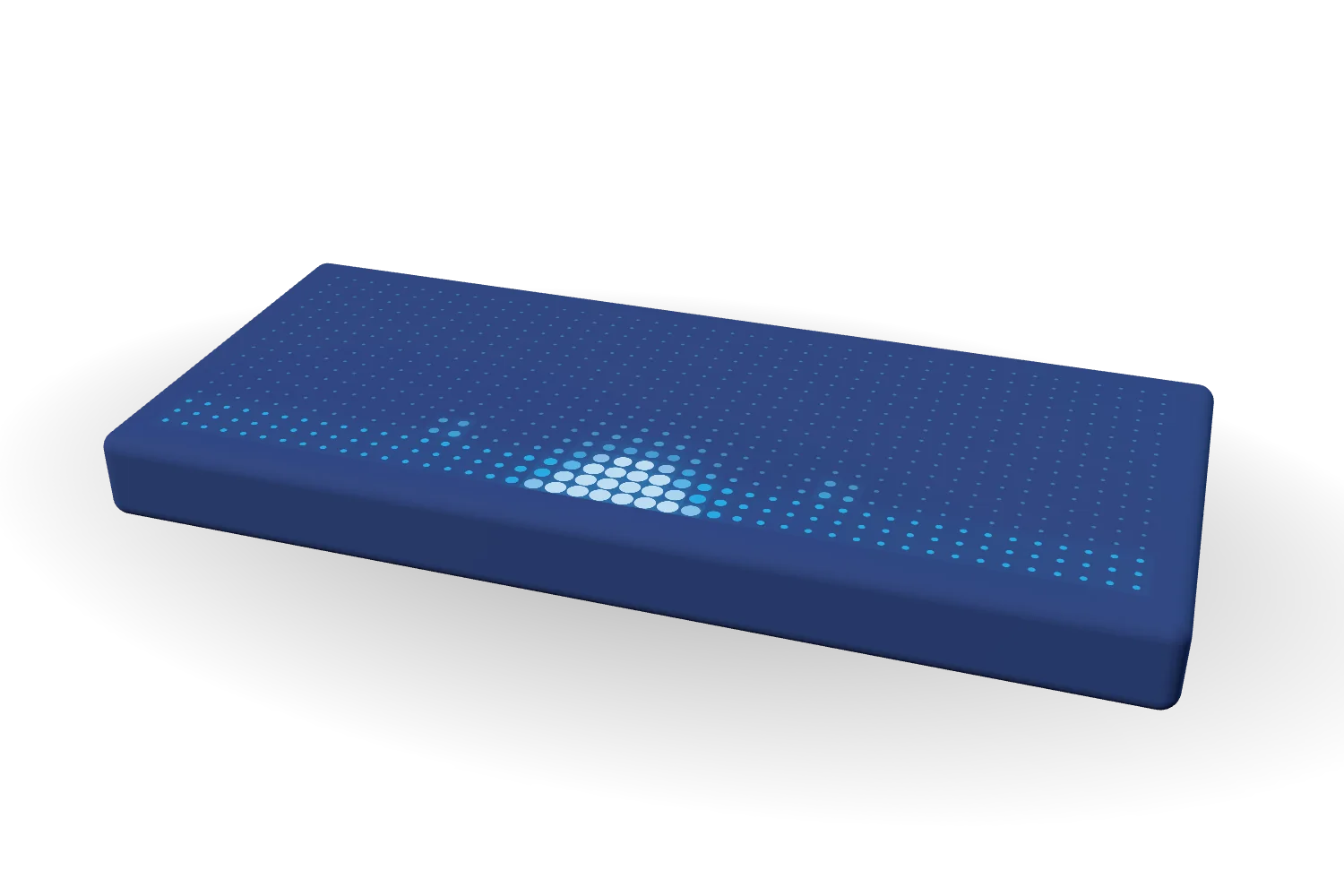
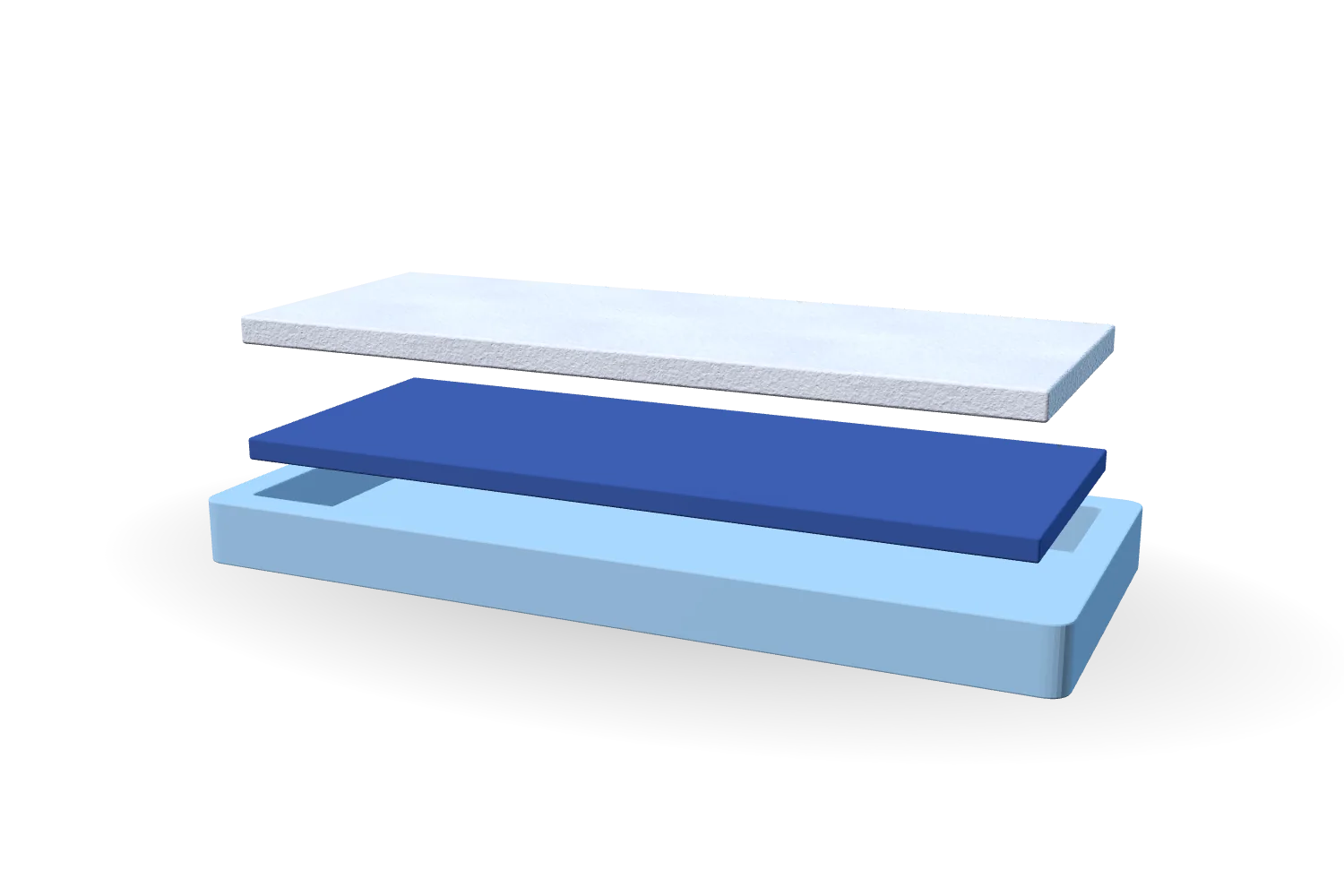
Start with one wing. Scale when you’re ready.
- Typically installed and commissioned in 1–2 days
- Clinical and IT training from our team
- Purchase or subscription, with flexible terms
Sources
- Yang W, Wood B, Lindsay J, Savaglio M. 2026. Manuscript in preparation. Methods and definitions on request.
- Nghiem S, et al. Int J Nurs Stud. 2022;130:104191.
- NPIAP, EPUAP, PPPIA. Repositioning for Preventing Pressure Injuries. In: Prevention and Treatment of Pressure Ulcers/Injuries: Clinical Practice Guideline. The International Guideline, 4th ed. Haesler E (Ed.). 2025.
- Pickham D, et al. Int J Nurs Stud. 2018;80:12–19.
- ACSQHC. Hospital-Acquired Complication 1: Pressure injury, fact sheet.